
The 30 Things That Determine What a Buyer Will Pay for Your Business
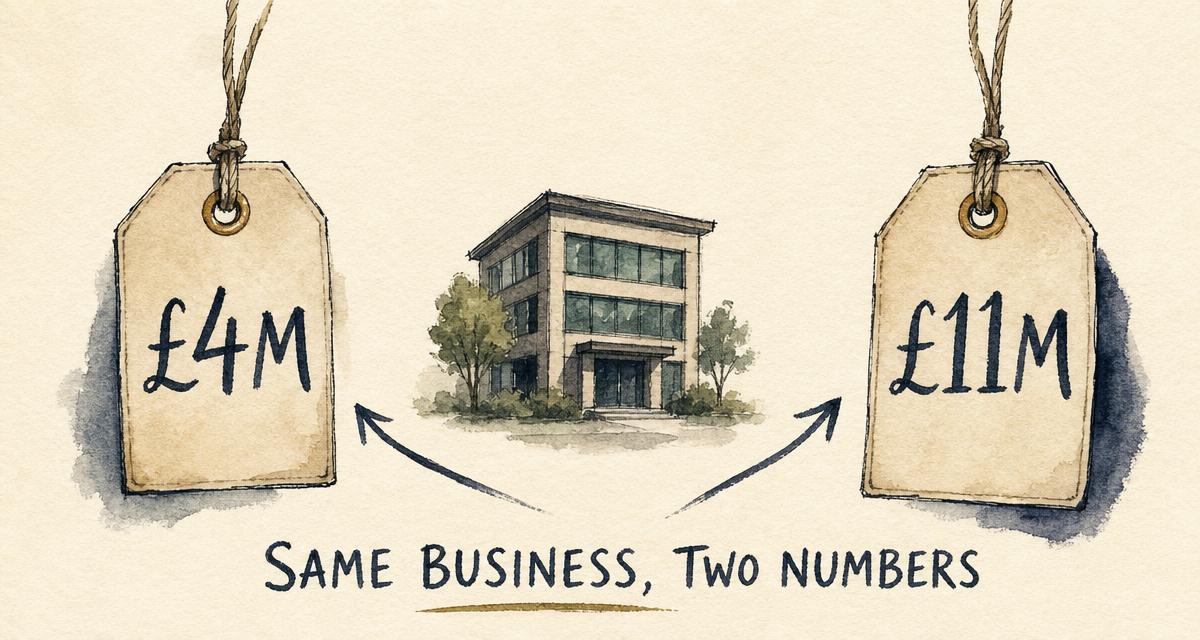
Two businesses with identical profit can trade at multiples that differ by 100 per cent. The difference is not luck. It is these 30 factors that experienced acquirers test.

What is your business worth today?
Enter your website and our M&A team will prepare a written valuation and exit optimisation report. No cost, no credit card, no obligation.
Strictly confidential
Strictly confidential. Your personalized report is prepared by our internal team alone — the founder, head of M&A and associates. It is never shown to buyers or anyone outside the deal team without your permission.
Already know your number?
Most business owners think valuation is about profit multiplied by a number. It is not. Here are the factors that actually move the multiple, explained by the people who negotiate these deals for a living.
Every week, a business owner tells us their company is "worth six times EBITDA" because they read it in an article or heard it at a conference. And every week, we have to explain that multiples are not fixed. They are not industry averages. They are not rules of thumb. They are the output of a negotiation between a buyer and a seller, and the inputs to that negotiation are the specific characteristics of the specific business being sold.
Two fire safety companies with identical revenue and identical profit can trade at multiples that differ by 100 per cent. Two dental practices with the same number of chairs and the same turnover can sell for amounts that differ by £1 million. The difference is not luck. It is not timing. It is not "finding the right buyer." It is the underlying quality of the business, assessed across dozens of factors that experienced acquirers have learned to test.
This article sets out those factors. Not in theory, but from the perspective of the people who actually write the cheques. If you want to see how your business scores across these factors right now, our free valuation calculator assesses all 30 in about 15 minutes.
The Financial Foundation
1. Earnings trajectory
A buyer is not paying for what you earned last year. They are paying for what the business will earn next year, and the year after, and the year after that. A company growing at 15 per cent per annum is worth materially more than a company that has been flat for three years, even if today's profit is identical. Growth is evidence that the business model works and that the market is expanding.
2. Earnings quality
Not all profit is created equal. Profit from long-term maintenance contracts is higher quality than profit from one-off installation projects. Profit from a diversified customer base is higher quality than profit concentrated in three accounts. Profit that recurs without re-selling is higher quality than profit that must be won fresh every month. Buyers pay more for earnings they can rely on. The ICAEW's guidance on quality of earnings formalises this concept for professional advisors.
3. The add-back bridge
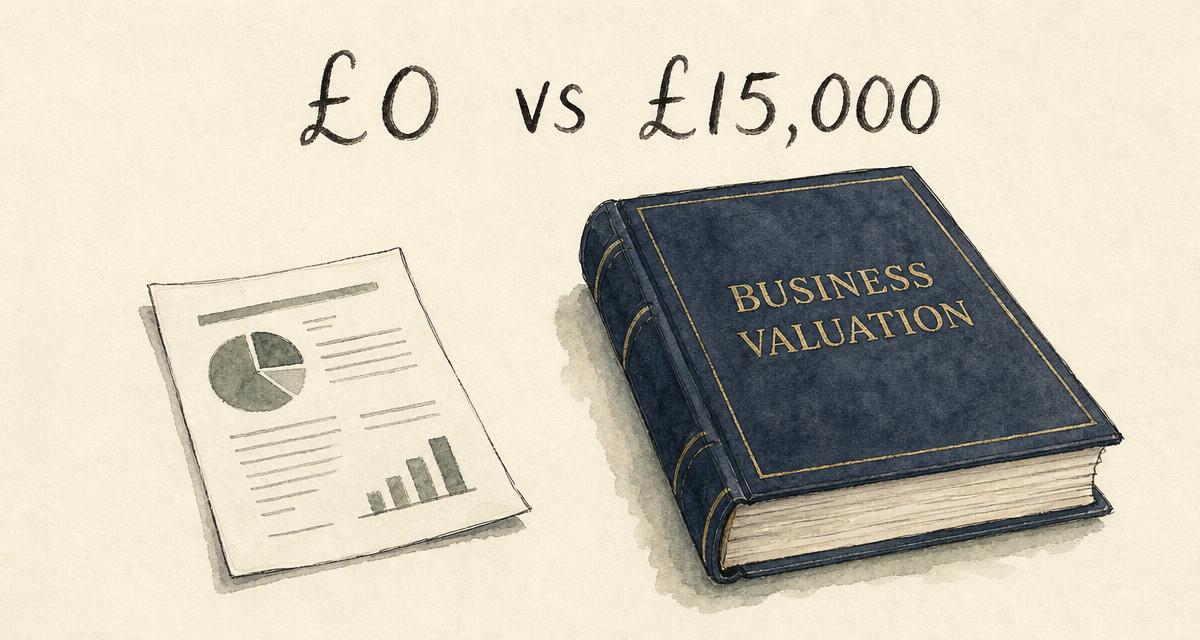
The gap between your reported profit and your adjusted EBITDA is where value is often hidden or destroyed. Legitimate add-backs (above-market owner salary, one-off legal costs, personal expenses) increase the earnings base. But add-backs that a due diligence team would reject (costs that will recur, revenue that will not repeat) destroy credibility and reduce the multiple. The cleaner and more defensible your add-back bridge, the more a buyer will pay. For a detailed comparison of what this process looks like at different price points, see our article on the 15-minute valuation vs the £15,000 valuation.
4. Revenue visibility
How much of next year's revenue is already committed? A business with 80 per cent of its revenue under contract entering the new financial year has dramatically more visibility than a business that starts January with an empty order book. Buyers price this visibility directly into the multiple.
5. Margin stability
Consistent margins signal a well-managed business. Margins that swing wildly from year to year signal either pricing problems, cost control issues, or dependency on a small number of high-margin projects. Stability is valued. Volatility is discounted.
The Commercial Engine
6. Customer concentration
If your top three customers represent more than 40 per cent of revenue, that is a risk factor. If no single customer exceeds 10 per cent, that is a premium factor. Buyers model what happens if the largest customer leaves after completion. The less the answer matters, the more they will pay. Harvard Business Review has documented how customer concentration affects acquisition pricing in mid-market deals.
7. Customer tenure
How long have your customers been with you? A customer base with an average tenure of seven years is evidence of genuine switching costs and relationship depth. A customer base that turns over every eighteen months suggests the service is commoditised and price-sensitive.
8. Contract structure
Verbal agreements are worth less than written contracts. Monthly rolling agreements are worth less than annual contracts. Annual contracts are worth less than multi-year frameworks. The longer the contractual commitment, the more certain the future cash flows, and the higher the multiple.
9. Pricing power
Can you raise prices without losing customers? If you have raised prices by 5 per cent annually for the last three years and retained 95 per cent of your customer base, that is evidence of genuine pricing power. If you have not raised prices in five years because you are afraid of losing work, that tells a buyer something very different.
10. Route to market
How does new business arrive? If 80 per cent of new revenue comes from the owner's personal relationships, that is a key-person risk. If it comes from inbound enquiries, referrals, and an employed sales team, that is a scalable commercial engine that will survive the owner's departure.
The People and Key-Person Risk
11. Owner dependency
This is the single most common value destroyer in owner-led businesses. If the owner is the primary salesperson, the primary project manager, the primary customer relationship holder, and the primary decision-maker, the business is not really a business. It is a well-paid job. Buyers know this, and they price it accordingly. We explore this in depth in our article on valuation gaps and key-person dependency.
The test is simple: could the business operate without you for six months? If the answer is no, your multiple will be lower than a comparable business where the answer is yes.
12. Management team depth
Is there a layer of management between the owner and the workforce? An operations manager, a contracts manager, a finance controller? Each role that exists and is competent reduces the buyer's integration risk and increases the multiple.
13. Employee retention
High staff turnover signals cultural problems, below-market pay, or poor management. Low turnover signals a stable, well-run operation. Buyers will ask for your staff turnover rate. They will ask how many employees have been with you for more than three years. They will ask whether anyone has a restrictive covenant. CIPD benchmarking data provides sector-specific turnover norms for UK businesses.
14. Succession readiness
If the owner left tomorrow, who would run the business? If the answer is "nobody" or "it would collapse," the buyer knows they need to invest heavily in management post-completion. That investment comes off the price.
Operations and Systems
15. Process documentation
Are your processes documented? Could a new employee follow a written procedure to complete the most common tasks? Could a buyer's integration team understand how the business operates within a week? Documentation is not bureaucracy. It is evidence that the business is a system, not a personality.
16. Technology and systems
A business running on paper job sheets, Excel spreadsheets, and the owner's memory is worth less than a business with a CRM, a job management system, digital scheduling, and automated invoicing. Not because technology is inherently valuable, but because it signals that the business can scale without proportional increases in headcount.
17. Quality and compliance systems
In regulated sectors, quality management systems (ISO 9001, sector-specific standards) are not optional extras. They are evidence that the business operates to a standard that a buyer can rely on. A fire safety company with a documented quality management system, regular internal audits, and a clean compliance record is worth more than one that "just gets on with it."
18. Supply chain and subcontractor management
How dependent is the business on specific suppliers or subcontractors? If a single supplier provides 70 per cent of your materials and they could raise prices or withdraw supply, that is a risk. If you have approved supplier lists, negotiated terms, and alternative sources for every critical input, that is resilience.
Accreditations and Regulatory Position
19. Industry accreditations
In building services: BAFE, LPCB, NSI, SSAIB, Gas Safe, NICEIC, NAPIT, REFCOM, Constructionline, CHAS, SafeContractor. In healthcare: CQC registration, NHS contract status, professional body memberships. Each accreditation is a barrier to entry that a buyer would need two to three years to replicate organically. The more you hold, the more defensible your market position, and the higher the premium. See our sector-specific guides for fire safety, electrical, HVAC, and security systems multiples.
20. Regulatory compliance history
A clean compliance record is expected. A history of enforcement actions, improvement notices, or regulatory sanctions is a discount factor. Buyers will check. Their lawyers will check. Their insurers will check. Companies House filings, HSE enforcement notices, and sector-specific registers are all publicly searchable.
21. Insurance and liability position
Professional indemnity cover, public liability limits, employer's liability, and claims history all matter. A business with adequate cover and a clean claims history is straightforward to insure post-completion. A business with a history of claims or inadequate cover creates uncertainty that buyers will price in.
Market Position and Growth
22. Geographic coverage
A business operating in a single postcode is limited in its growth potential. A business with coverage across a region, or multiple regions, offers a buyer immediate geographic scale. Multi-site businesses typically command higher multiples than single-site operations.
23. Service breadth
A fire safety company that offers installation, maintenance, monitoring, risk assessment, and training is more valuable than one that only installs. Breadth creates cross-selling opportunities, increases customer lifetime value, and makes the business harder to displace.
24. Market growth
Is the sector growing? Are there regulatory tailwinds (the Building Safety Act 2022, ageing population demographics, net zero requirements) that will drive demand regardless of the economic cycle? Buyers pay more for businesses in growing markets because the growth comes without additional investment.
25. Competitive position
Are you the market leader in your niche and geography? Are you one of three approved contractors for a major client? Do you have exclusive relationships or preferred supplier status? Market position is a moat, and moats command premiums.
The Deal Factors
26. Clean corporate structure
A simple limited company with one class of shares, no minority shareholders, no intercompany loans, and no related-party complications is straightforward to acquire. A complex group structure with multiple entities, cross-charges, shared employees, and property held separately creates legal and tax complexity that slows the deal and reduces the price.
27. Financial reporting quality
Monthly management accounts, a competent bookkeeper or finance function, clean audit trails, and up-to-date statutory filings signal a well-managed business. Incomplete records, late filings, and a shoebox of receipts signal risk.
28. Asset base
Vans, equipment, property, intellectual property, software, and stock all have value. A business with a modern, well-maintained fleet and owned premises has tangible assets that a buyer can borrow against. This matters because many acquisitions are partially debt-funded, and lenders need security. The British Business Bank publishes data on asset-backed lending availability for UK SMEs.
29. Working capital position
A business that collects cash before it delivers the service (subscription models, prepaid contracts) has a positive working capital cycle. A business that delivers the service and then waits 90 days for payment has a negative working capital cycle. The first requires less capital to operate and is worth more.
30. Timing and market conditions
The M&A market has cycles. Buyer appetite, available debt finance, and competitive tension all fluctuate. The BDO Private Company Price Index and Experian MarketIQ track UK deal activity quarterly. Selling into a market where multiple buyers are actively acquiring in your sector creates competitive tension that drives price up. Selling into a quiet market with limited buyer activity reduces your negotiating leverage.
How These Factors Combine
No single factor determines your valuation. They interact. A business with outstanding recurring revenue but critical owner dependency will trade at a lower multiple than its revenue quality deserves. A business with modest revenue quality but exceptional team depth and systems will trade at a higher multiple than its financials alone would suggest.
The art of valuation is understanding how these factors combine for your specific business, in your specific sector, at this specific moment in the market. That is what our valuation calculator is designed to assess. It evaluates your business across all 30 factors, weights them according to what buyers in your sector actually prioritise, and produces a report that shows exactly where you sit on the spectrum and what you could do to move up it.
You can also score your exit readiness in six minutes, or read about how a real business sold for £1.1M to see these factors in action.
Get your free valuation report — 15 minutes, 51 questions, 30 weighted factors, three timing scenarios. The same analytical framework our advisory team uses on live mandates.
DealFlowAgent is a specialist M&A advisory firm for owner-led businesses in building services, facilities management, healthcare, and professional services. Start your free valuation or book a confidential call with our team.
Experienced Dealmakers Lead Your Exit
A senior M&A bench, plus a sector specialist recruited for your industry on every deal.

Head of M&A
Joining 22 August 2026, name announcing soon
Joining full-time on 22 August 2026 from the largest M&A advisory firm in the UK, owned by K3 Capital. As an ex-Director he managed teams of M&A advisors, analysts and associates, working daily with business owners, buyers and stakeholders on live acquisition deals. Selected from 260 applicants alongside colleagues from investment banking backgrounds, he brings that experience and network to lead the advisory bench across Building Services, Facilities Management, and Healthcare.
Joining full-time on 22 August 2026 from the largest M&A advisory firm in the UK, owned by K3 Capital. As an ex-Director he managed teams of M&A advisors, analysts and associates, working daily with business owners, buyers and stakeholders on live acquisition deals. Selected from 260 applicants alongside colleagues from investment banking backgrounds, he brings that experience and network to lead the advisory bench across Building Services, Facilities Management, and Healthcare.

Martin is one of the most well-connected figures in UK fire, security, building services and FM. He is Chairman of both the Fire Industry Association and the British Security Industry Association, the only person in the UK to hold both roles simultaneously. Martin spent over a decade in senior leadership at Mitie, latterly as Industry Liaison Director for its fire and security division, helping scale the business past £500m in revenue and playing a role in the £366m acquisition of Marlowe plc, which created one of the UK's largest compliance, fire and security services groups. He joined DealFlowAgent because owners in these sectors deserve a genuine sector-specialist advisor across valuation, business optimisation and buyer access. In recognition of his industry roles, he acts in a personal, non-partisan capacity.
Martin is one of the most well-connected figures in UK fire, security, building services and FM. He is Chairman of both the Fire Industry Association and the British Security Industry Association, the only person in the UK to hold both roles simultaneously. Martin spent over a decade in senior leadership at Mitie, latterly as Industry Liaison Director for its fire and security division, helping scale the business past £500m in revenue and playing a role in the £366m acquisition of Marlowe plc, which created one of the UK's largest compliance, fire and security services groups. He joined DealFlowAgent because owners in these sectors deserve a genuine sector-specialist advisor across valuation, business optimisation and buyer access. In recognition of his industry roles, he acts in a personal, non-partisan capacity.

Nick leads FM Talent Partners, the facilities management and real estate leadership search firm, and is a leading specialist in building services and FM management talent. He partners with DealFlowAgent on two-way referrals: helping business owners and acquirers fill the key roles that decide whether a business is sellable, and introducing owners who are thinking about their next chapter to a team that knows their industry and their market. Key-person dependency is one of the two most common reasons a sale collapses, and Nick fixes it at source.
Nick leads FM Talent Partners, the facilities management and real estate leadership search firm, and is a leading specialist in building services and FM management talent. He partners with DealFlowAgent on two-way referrals: helping business owners and acquirers fill the key roles that decide whether a business is sellable, and introducing owners who are thinking about their next chapter to a team that knows their industry and their market. Key-person dependency is one of the two most common reasons a sale collapses, and Nick fixes it at source.

James Duboullay
Senior M&A Advisor
- •25+ years across investment banking, M&A and fundraising
- •Sector focus: essential services and software
- •Long-standing relationships with private equity buyers and growth funds
- •Personally advising DealFlowAgent founders for the past four years
- •25+ years across investment banking, M&A and fundraising
- •Sector focus: essential services and software
- •Long-standing relationships with private equity buyers and growth funds
- •Personally advising DealFlowAgent founders for the past four years

Emerson Patton
Sector Specialist: Building Services & Facilities Management
- •20+ years advising owners in building services, fire safety, HVAC, plumbing, and construction
- •Guided 200+ companies through growth, profit improvement, and exit planning
- •Builds equity value and operational structure long before a sale
- •Partners with DFA to prepare owners for exit while the advisory team runs the sale
- •20+ years advising owners in building services, fire safety, HVAC, plumbing, and construction
- •Guided 200+ companies through growth, profit improvement, and exit planning
- •Builds equity value and operational structure long before a sale
- •Partners with DFA to prepare owners for exit while the advisory team runs the sale

Kaya Kesici
M&A Advisor, Fire Safety, Security & Compliance
- •17 completed M&A transactions over the past six years across UK SME fire safety, security and compliance-led services
- •Sell-side and buy-side experience, buyer research, acquirer mapping, outreach and live process coordination
- •Information request lists, databook prep, IC-style summaries and EV-to-equity bridge work
- •Direct sector exposure across fire protection, security systems, CCTV, access control and intruder alarms
- •17 completed M&A transactions over the past six years across UK SME fire safety, security and compliance-led services
- •Sell-side and buy-side experience, buyer research, acquirer mapping, outreach and live process coordination
- •Information request lists, databook prep, IC-style summaries and EV-to-equity bridge work
- •Direct sector exposure across fire protection, security systems, CCTV, access control and intruder alarms
Previously

Ranger Fire & Security · Complete Building Services · Compliance Group

- •22 completed M&A transactions
- •Direct relationships with hundreds of strategic and financial acquirers
- •Previously built a mobility and field services business to 30 staff and 6 UK warehouses, then sold via competitive process with an EY M&A partner
- •Raised £2m in funding; placed 3rd of 1,900 at OnStage (the "Y Combinator of Europe")
- •Full-stack developer of advanced agent systems and second-brain tooling for the M&A process
- •22 completed M&A transactions
- •Direct relationships with hundreds of strategic and financial acquirers
- •Previously built a mobility and field services business to 30 staff and 6 UK warehouses, then sold via competitive process with an EY M&A partner
- •Raised £2m in funding; placed 3rd of 1,900 at OnStage (the "Y Combinator of Europe")
- •Full-stack developer of advanced agent systems and second-brain tooling for the M&A process
Sector Expert
Industry-Specific Advisor
For every engagement we add a sector specialist from your industry to the core team: a 15–25 year operator or advisor with direct relationships in your niche. Recruited per deal so you get the right fit, not a generalist.
For every engagement we add a sector specialist from your industry to the core team: a 15–25 year operator or advisor with direct relationships in your niche. Recruited per deal so you get the right fit, not a generalist.
The bench is growing. Two senior M&A hires confirmed for late July 2026, selected from 200+ applicants out of Goldman Sachs, Deutsche Bank, EY, KPMG and leading boutique M&A firms. See open roles →
The AI layer behind every advisor
Two in-house AI systems work alongside the human bench. They are software, not people, built and supervised by the advisory team.

Sage
AI Deal Concierge
Available 24/7. Monitors every signal in your deal and keeps the advisory team one step ahead. Trained on thousands of M&A transactions.

Sterling
Buy-Side Deal Origination Agent
Engages 13,000+ acquirers to surface live mandates and intent, then feeds your advisors with warm, ranked buyer matches.
The Exit Readiness Scorecard
Score your business across the factors acquirers underwrite, including key-person dependency, contract quality, customer concentration and earnings quality. Complete it below, print it, or download the PDF and work through it with your leadership team.
Watch the intro from our founder, Joe
Two minutes on how DealFlowAgent runs a confidential, competitive sale process for owners of building services, facilities management and healthcare businesses.
Joe Lewin
Exited entrepreneur and M&A advisor who has guided 20+ business owners through successful exits. Joe built and sold his first company after scaling to 80,000+ users and raised over £2M in funding. He founded DealflowAgent to combine traditional M&A expertise with AI technology, creating aligned advisory solutions for SME business owners. Joe regularly speaks on exit planning and M&A trends, and has built a network of thousands of strategic acquirers across UK and US markets.
What is your business actually worth?
Sector by sector benchmarks built from real completed transactions, with the valuation bands acquirers underwrite against.
- Fire Safety Business Valuation & EBITDA MultiplesWhat fire alarm, extinguisher, sprinkler and passive fire protection businesses sell for, band by band.
- Security Systems Business Valuation & EBITDA MultiplesCCTV, access control, intruder alarms and monitoring: the multiples acquirers are paying in 2026.
- Compliance, Testing & Inspection Valuation GuideWhy recurring statutory inspection revenue attracts the highest multiples in building services.
- Electrical Contracting Valuation & EBITDA MultiplesNICEIC, EICR and EV infrastructure: how electrical contractors are valued and sold.
- HVAC, Refrigeration & Cooling Valuation GuideService contract density, engineer retention and the multiples HVAC consolidators pay.